
Relationships are Foundational in Early Childhood
Before a child takes their first step or speaks their first word, they are already building the architecture of their future. They are learning to navigate safety, love, and trust. This is Early Relational Health (ERH), the invisible, essential foundation for lifelong well-being.
At Neighborhood Villages, we see early childhood educators for what they truly are: the front-line practitioners of relational health. These professionals spend up to 40 hours a week shaping the brain development and emotional resilience of our youngest citizens.
But for children to flourish, the adults around them must be supported.
Through our early relational health work, we partner with child care providers to make sure the adults in children's lives have what they need: training, connection, and the confidence to nurture the relationships that matter most. So, we added capacity by embedding two funded positions in these partner programs to help us gather data and better understand how to implement this work at a systems level. We also created a professional development pathway that builds specialized skills and knowledge and trains educators and professionals in early childhood education settings, while supporting them to apply for the necessary professional endorsements.
Last month, we gathered with partners and advocates to unveil the findings from the first year of our ERH pilot at the More Than Words Bookstore. The event was called The Thread that Connects: Weaving Early Relational Health into Early Childhood Education. We started with an incredible keynote delivered by Dr. Junlei Li (Saul Zaentz Chair in Early Childhood Education at Harvard University), followed by a panel discussion featuring Aditi Subramaniam (Director of Infant and Early Childhood Mental Health Policy at MSPCC), Lisa Garcia (Director of Early Relational Health at Neighborhood Villages), Beth Beckford (Assistant Director at Epiphany Early Learning Center), and Rose Curran (Inclusion Specialist at Epiphany Early Learning Center). Thank you to all those that were able to attend as we celebrated and centered the work of early educators as early relational health practitioners.
We are now excited to share the learnings and resources from our innovative early relational health pilot, which was launched in 2025 across a network of early childhood programs in Boston:
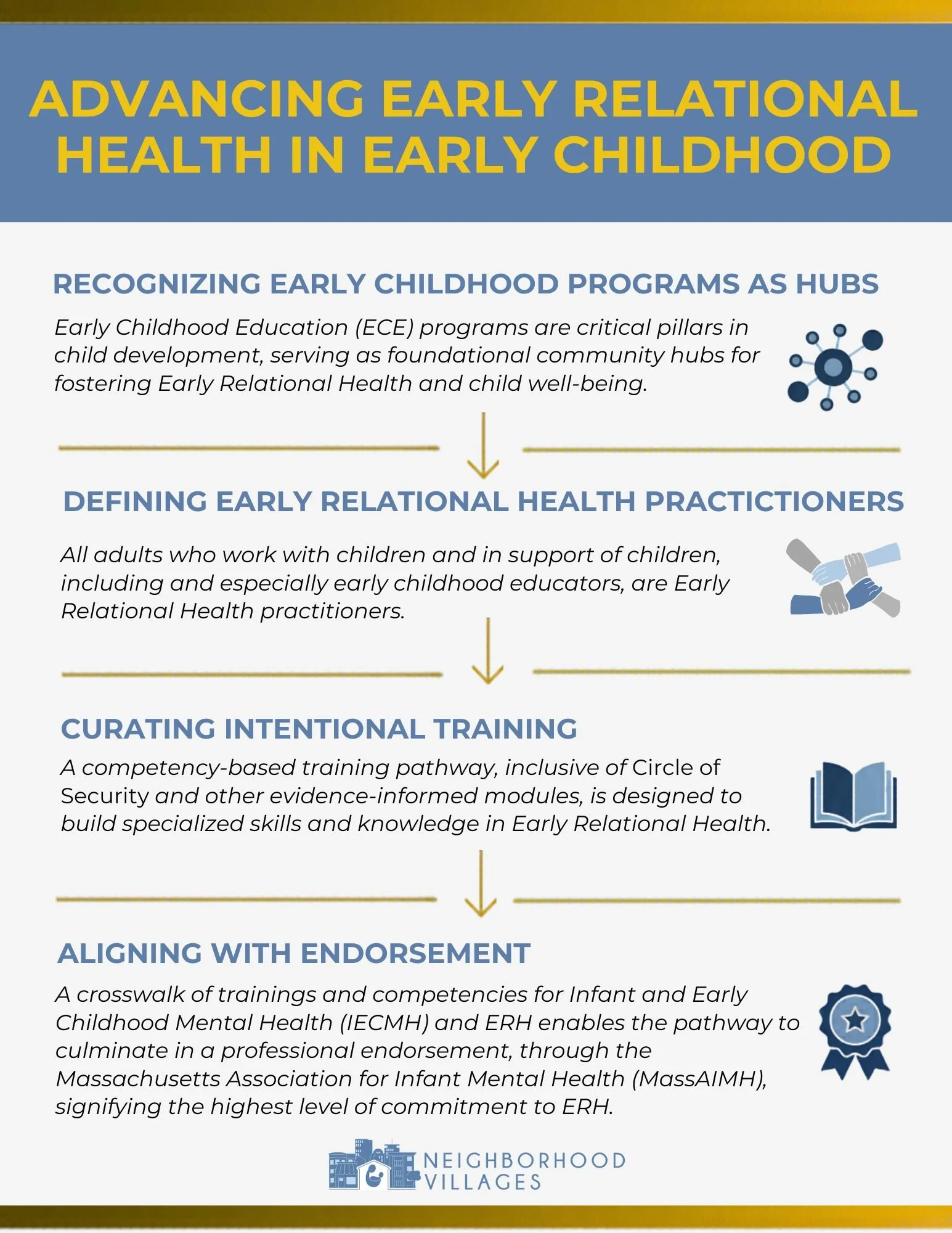
Advancing early relational health in early childhood
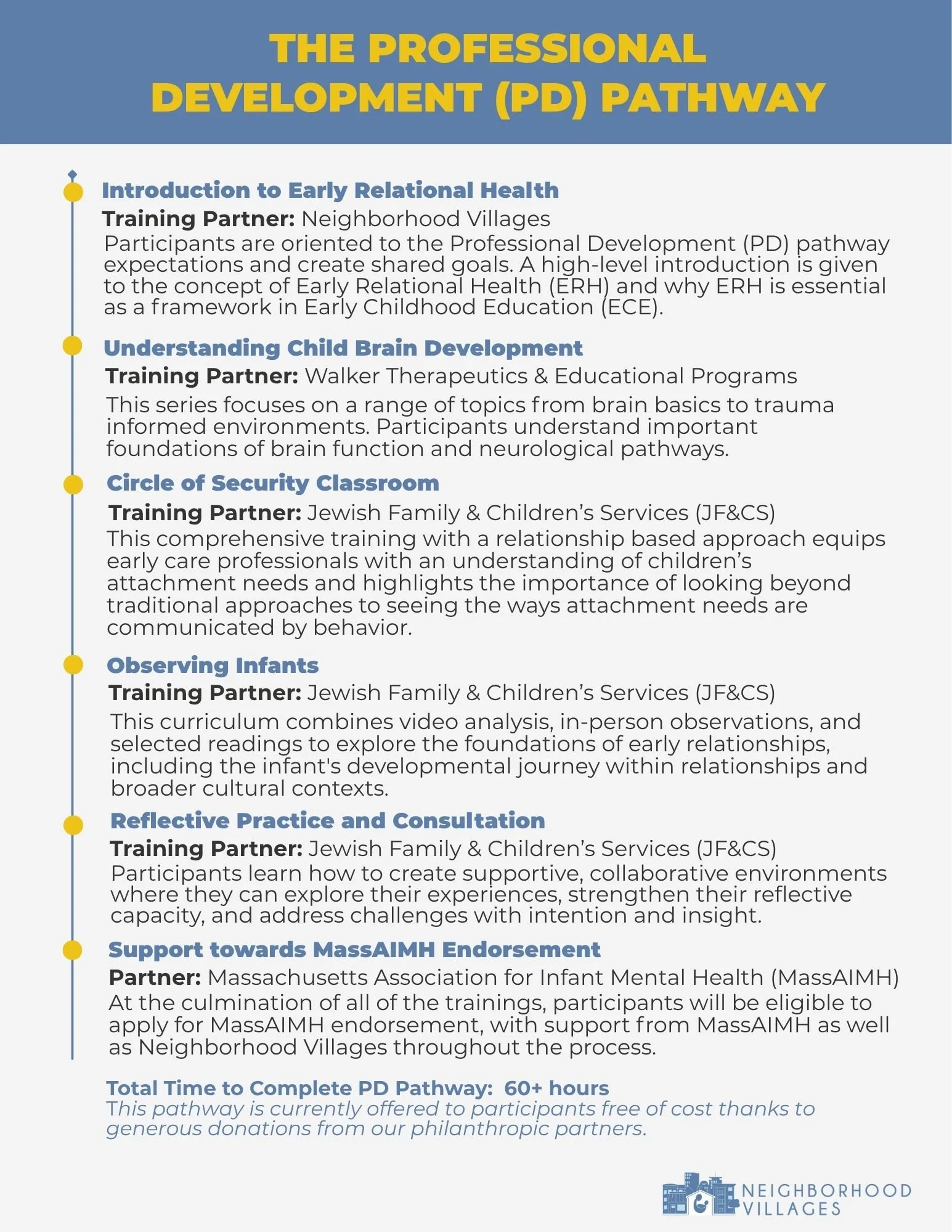
The professional development pathway in early relational health
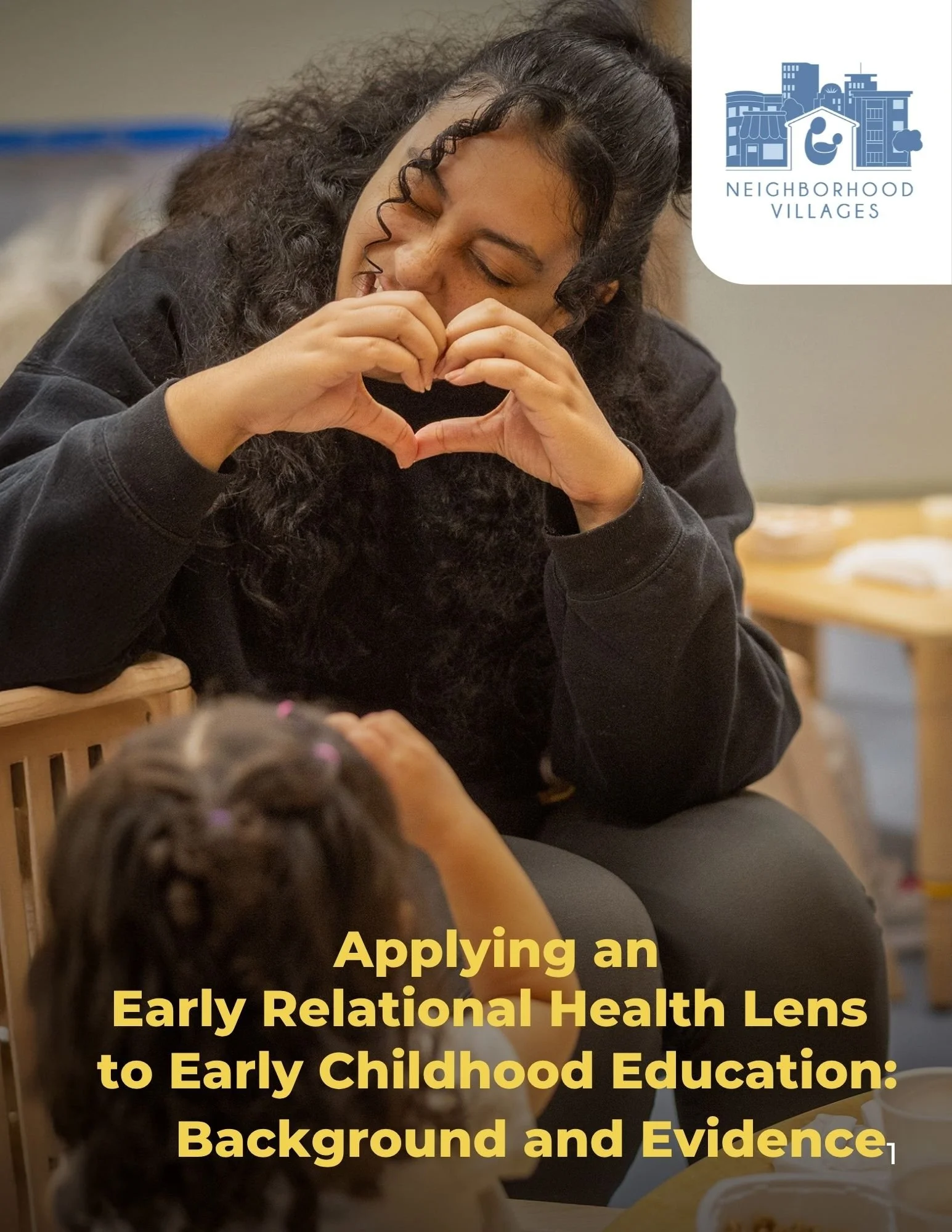
A brief on early relational health in early childhood settings
Check out all our early relational health resources here.
The research is clear: warm, responsive relationships in a child’s first years shape their brain, their health, and their future.
That is why we're working to build early relational health systems that support and invest in the educators and caregivers at the center of this work. Because when the adults around children are supported, connected, and valued, children flourish.